To request a media interview, please reach out to experts using the faculty directories for each of our six schools, or contact Jess Hunt-Ralston, College of Sciences communications director. A list of faculty experts is also available to journalists upon request.
News Center
Latest News

The Georgia Tech researcher and longtime neuroscience community leader will help catalyze new collaborations and research opportunities across the Institute for Neuroscience, Neurotechnology, and Society (INNS).
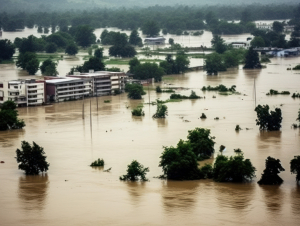
Using unprecedented observations of Ukraine’s 2023 Kakhovka Dam collapse, Georgia Tech researchers found that widely used flood models underestimated both water levels and flood timing.
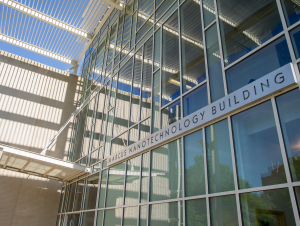
The Institute for Matter and Systems will provide support for three new and four renewed research projects to advance materials, devices, and processes.

Regents' Professor Facundo M. Fernández will collaborate on research in mass spectrometry, an analytical technique used to measure the mass-to-charge ratio of ions for research.
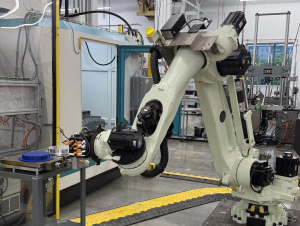
The cloud lab will give researchers nationwide remote access to Georgia Tech’s Advanced Manufacturing Pilot Facility, pairing AI with autonomous experimentation to accelerate new materials discovery.

From new calibration tools to a record-breaking catalog of detections, the LIGO–Virgo–KAGRA (LVK) detector network is leading the way in gravitational wave science.
Experts In The News
For most of the industrial era, spreading crushed limestone across farmland has been treated as a carbon problem. The rock contains carbon; it ends up in contact with air and water, and by the most conservative accounting conventions, carbon is assumed to escape as carbon dioxide. Regulators and major climate assessments have baked that assumption into their default rules for decades.
A study published in Nature now argues that the opposite is true and that the error came from asking the wrong question. Across more than 120 years of records from the Mississippi River Basin, the researchers, including study co-author Chris Reinhard, conclude that agricultural liming has removed somewhere between 300 and 400 million metric tons of carbon dioxide from the atmosphere since 1900.
Intelligent Living September 27, 2026Oceanographer Lily Dove has worked with marine mammals and robots to better understand climate change in Antarctica. In an interview published by Science News Explores, she discusses her experiences and shares advice for students interested in careers in science.
Science News Explores September 23, 2026