As a scientific advisor for the Netflix documentary “A Gorilla Story: Told by David Attenborough,” Tara Stoinski (Ph.D. Psychology 2000) helped translate decades of fieldwork into a poignant story of the historic Pablo gorilla family.
It’s a role she knows well.
For more than 11 years, Stoinski has served as president, CEO, and chief scientific officer of the Dian Fossey Gorilla Fund, leading efforts to help the world better understand and protect Rwanda’s mountain gorillas — a species with only about 1,000 left in the wild.
Although she now oversees a multimillion-dollar budget and 400 employees worldwide, she never planned to be a CEO.
“I’m a scientist at my core,” says Stoinski. “Day to day, I function more as a leader and executive, but I still think of myself as a scientist first.”
Her job covers a wide range of responsibilities, including fundraising, public speaking, budgeting, and strategy. One week, she might find herself observing gorilla behavior in Rwanda; the next, she’s back in the U.S., discussing conservation on the popular Armchair Expert podcast.
“I love my job,” she says. “It doesn’t feel like work; it’s a passion.”
A Helluva Scientist
One of the reasons Stoinski chose Georgia Tech for her Ph.D. was its connection to Zoo Atlanta.
Her doctoral advisor, the late Terry Maple, emeritus professor in the School of Psychological and Brain Sciences, served as director of Zoo Atlanta, giving students rare access to conservation-focused research.
“The zoo was our lab. I studied elephants, lemurs, gorillas, and golden lion tamarins, both in the zoo and in the wild in Brazil and Africa,” says Stoinski.
She appreciates how Georgia Tech prepared her for the challenges of her career.
“The rigor of a Georgia Tech education is something you need as a scientist,” she says. “I also had the opportunity to do a lot of public speaking and teaching, which are huge parts of my job now.”
Leading Global Conservation Efforts
After earning her Ph.D., Stoinski spent 14 years with Zoo Atlanta while also working with the Atlanta-based Dian Fossey Gorilla Fund. She became CEO in 2014 and now oversees conservation and research programs in Rwanda and the Democratic Republic of the Congo.
Under her leadership, the Fossey Fund has expanded its footprint, including opening its Ellen DeGeneres Campus in 2022, a 12-acre research and education center in Rwanda.
The site includes labs, classrooms, and a restored landscape, where roughly 250,000 plants from 110 species have been planted to reestablish native ecosystems.
“We host hundreds of students — including groups from Georgia Tech, and support dozens of graduate and postdoctoral researchers, from countries all over the world including many from Africa,” she explains. “Seeing their excitement and commitment gives me lots of hope for the future.”
Scientific Storytelling
A Gorilla Story follows the Pablo family of mountain gorillas living on the slopes of Volcanoes National Park in northwestern Rwanda.
“The Pablo group goes back to Dian Fossey’s time,” explains Stoinski. “It’s the largest group of gorillas ever recorded, at one point reaching 65 individuals. An average gorilla family is about 10.”
Due to Rwandan regulations, filming could take place for just one hour each day. Filmmakers and scientists would often have to hike for five to six hours to reach the gorillas.
Because Dian Fossey Gorilla Fund researchers have followed these gorilla families for decades, they were already familiar with the individual gorillas, including six generations of family history, which “makes the story incredibly rich,” says Stoinski.
“You see grief, relationships, alliances — all of it,” she says. “Ultimately, I hope that connection leads people to care and to take action.”
Collaborative Conservation
Stoinski’s career is all about taking action — and inspiring others to do the same.
“We need people on the ground doing this work, but we also need people outside of our field to support and be aware of what’s happening to gorillas and the planet’s biodiversity,” she says.
She encourages Tech students to stay informed:
“Even if you’re not going into conservation, take a class, listen, learn,” she says. “Unfortunately, there are real challenges facing the next generation.”
She frequently points out that by helping gorillas, we’re saving ourselves, sharing that gorillas live in the Congo Basin, one of the most important ecosystems on Earth. By dispersing seeds and maintaining forest structure, they help sustain environments critical for climate stability and planetary health.
“Protecting gorillas means protecting those ecosystems, which ultimately support human survival.”
A Lasting Georgia Tech Connection
Stoinski maintains strong ties to Georgia Tech through research collaborations and student engagement. Projects over the years have included helping to establish the Center for Geographic Information Systems and Remote Sensing at the University of Rwanda, geospatial mapping, and architectural design and planning.
She invites alumni and students to engage with the work firsthand.
“I encourage more Georgia Tech alumni and students to work with us or come see us. And if you want to meet with a Georgia Tech grad, I lead tours: we can put on our Tech gear and take a photo with the gorillas!”
Related Media
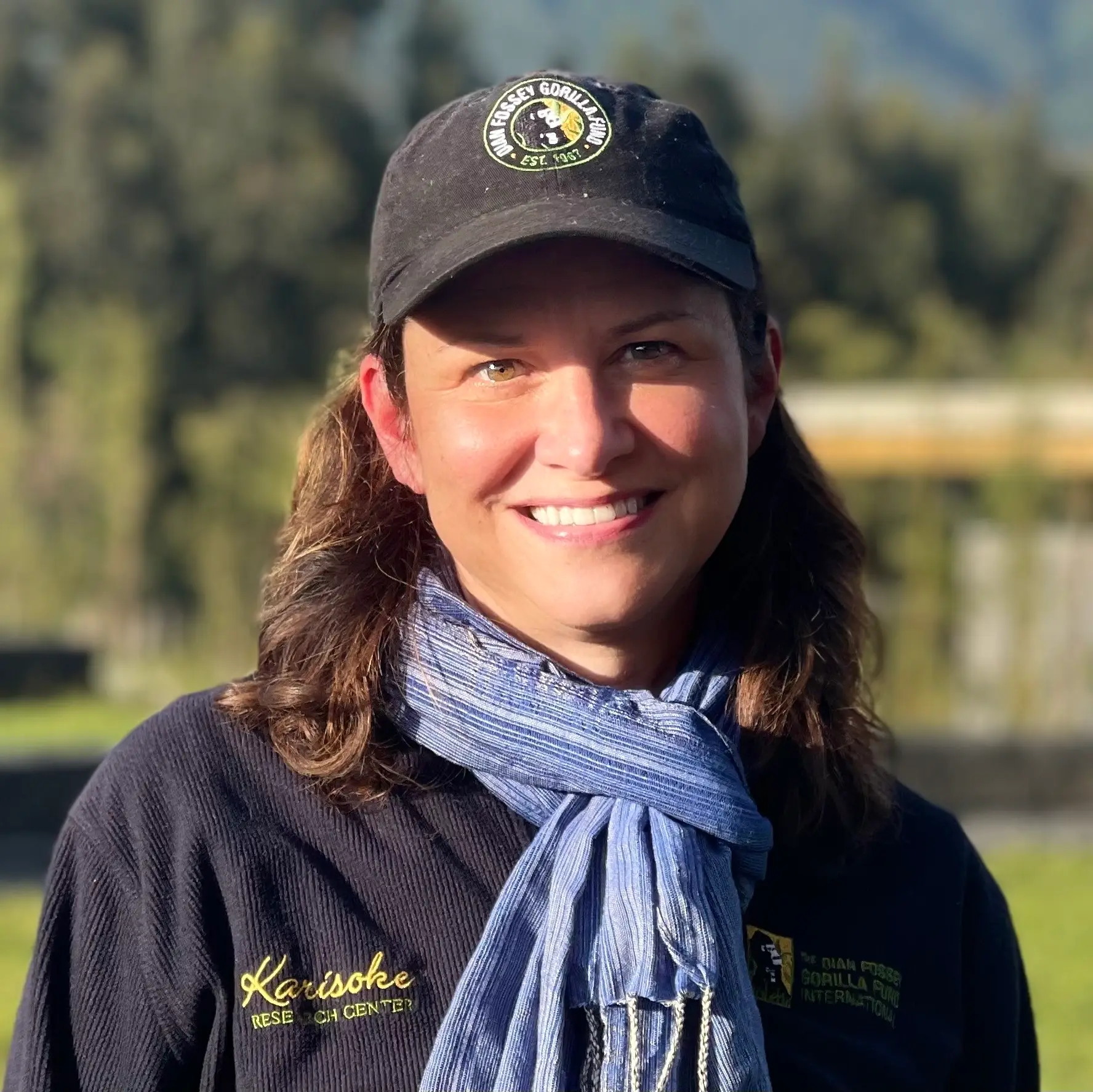
Tara Stoinksi
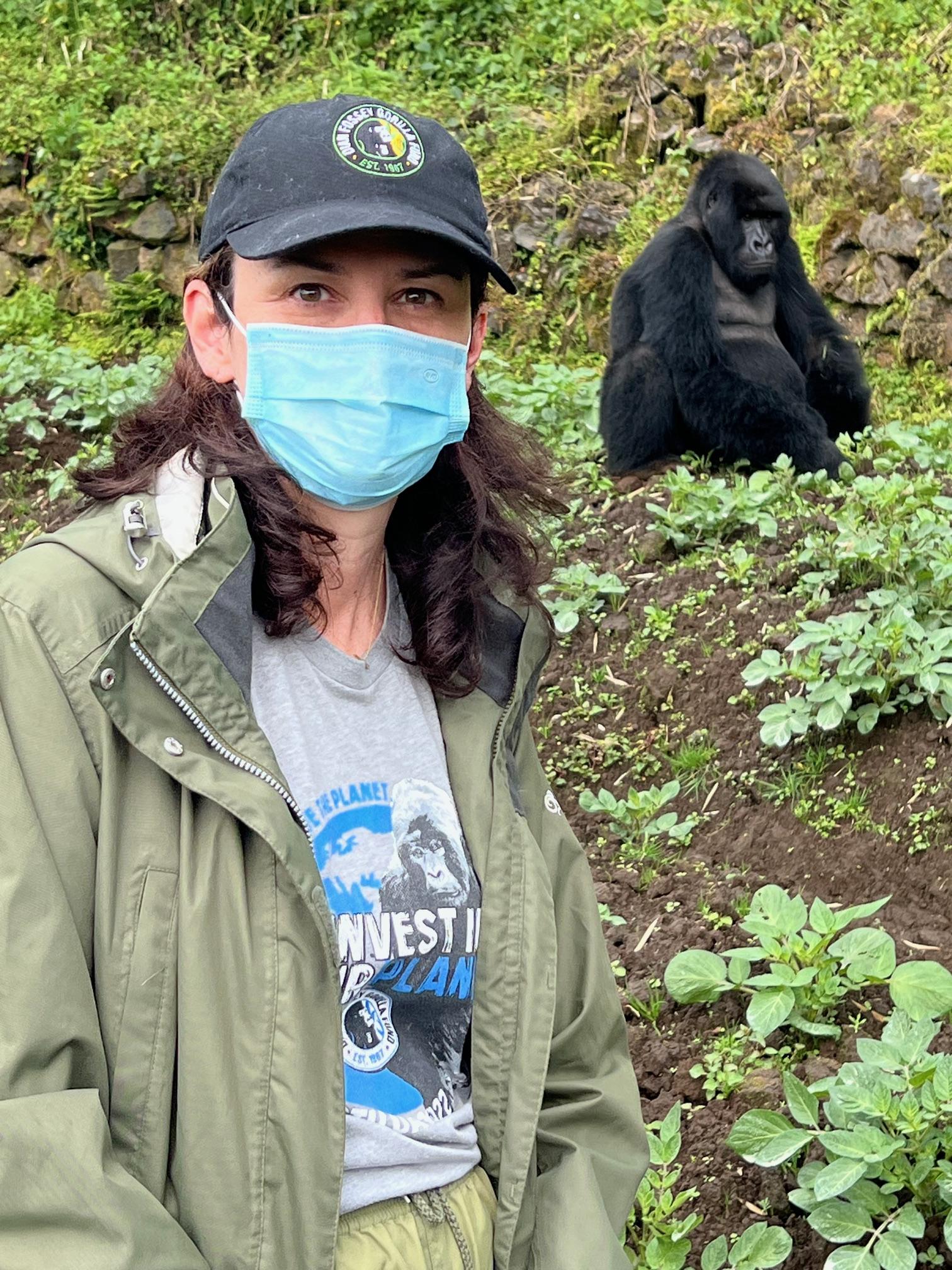
Stoinski has studied gorillas for more than three decades and is the author of over 200 scientific publications and books.
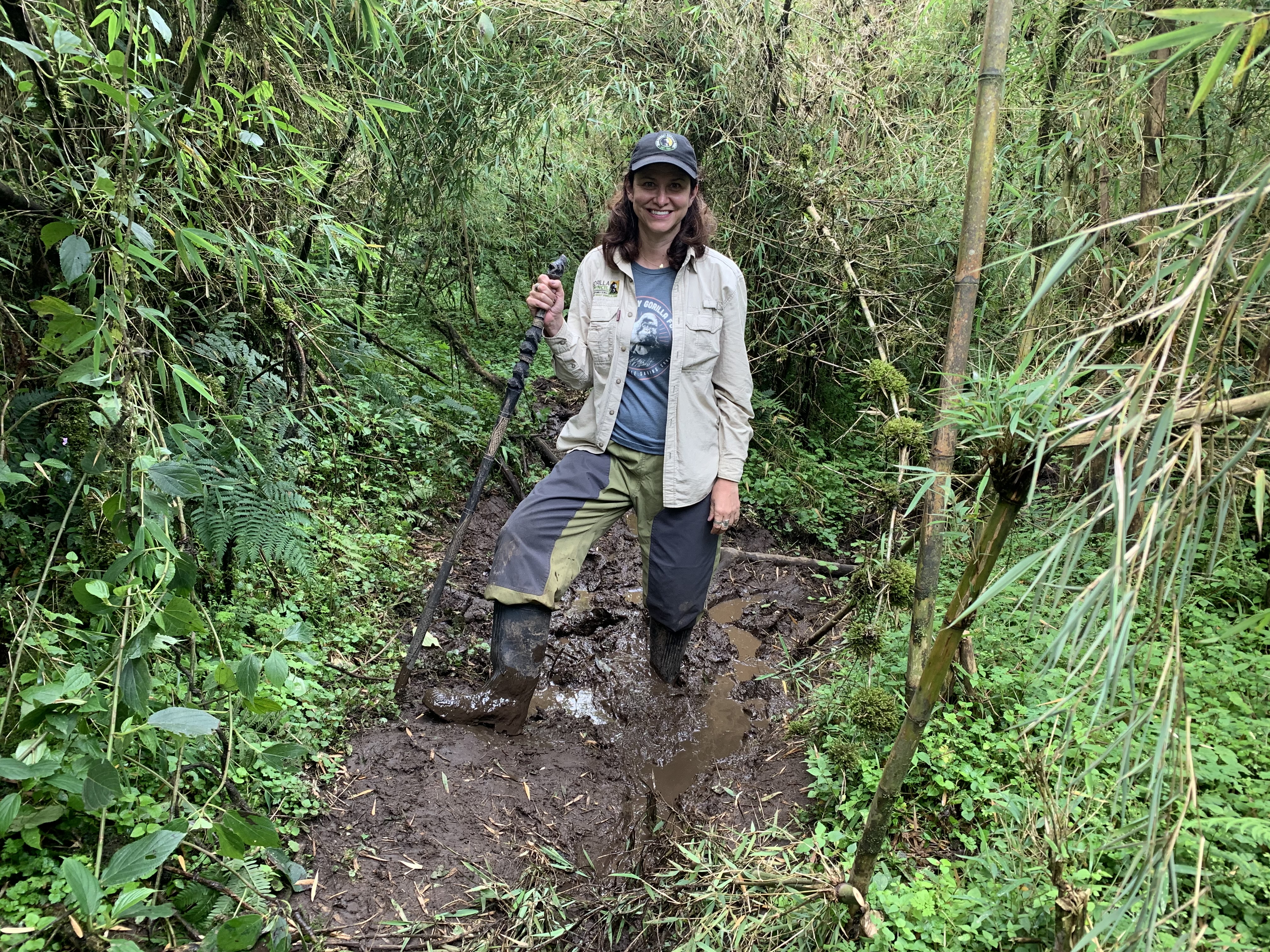
As president, CEO, and chief scientific officer of the Dian Fossey Gorilla Fund, Stoinski splits her time between the Atlanta headquarters and Rwanda.
For More Information Contact
Laura Segraves Smith, writer