Latest News

Fourth-year biology major Giuli Capparelli Sanabria is among the five students named 2026 Ramblin' Royalty. This recognition celebrates students who embody Georgia Tech’s motto, Progress and Service.
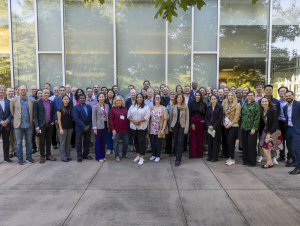
Leaders from university energy institutes across the country gathered at Georgia Tech Oct. 14 – 15 for the 2026 University Energy Institute Leadership Collaborative (UEILC) Summit.
Hosted by Georgia Tech's Strategic Energy Institute (SEI), the annual summit brought together representatives from academia, industry, government, national laboratories, and nonprofits to discuss strengthening energy systems and preparing for a changing energy future. Topics focused on collaboration, workforce development, and strategies for building resilience amid the challenges in the energy sector.
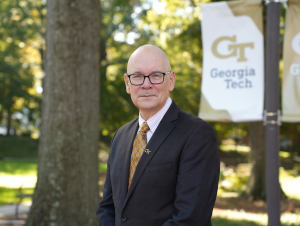
David Collard, senior associate dean for the College of Sciences and professor in the School of Chemistry and Biochemistry, has accepted an appointment to serve as the interim leader for the College of Sciences.

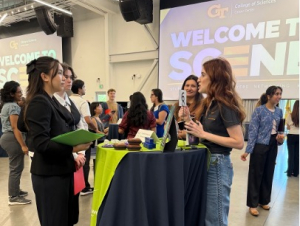
Students explored career possibilities across industries while making connections, gaining valuable insights, and building confidence for the job search.

For Georgia Tech physicists, this year’s Nobel Prize in Physics recognizes decades of work that helped establish neutrino astronomy as a new way to understand the universe.
- 1 of 280
- older ›