To request a media interview, please reach out to experts using the faculty directories for each of our six schools, or contact Jess Hunt-Ralston, College of Sciences communications director. A list of faculty experts is also available to journalists upon request.
News Center
Latest News
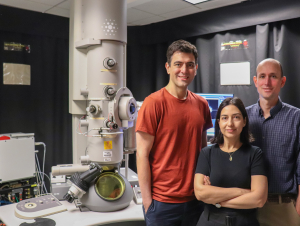
Scientific discovery is often portrayed as the result of long hours alone in a lab, but true science is inherently collaborative. The most robust experimental processes are developed through partnerships across multiple areas of research.
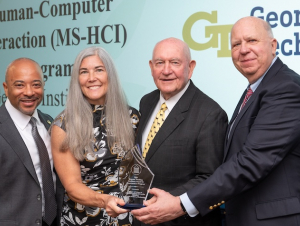
MSHCI program director Dick Henneman and assitant director Carrie Bruce reflect on 30 years of success after they received the 2026 Teaching Excellence Award for Department or Program from the USG Board of Regents.
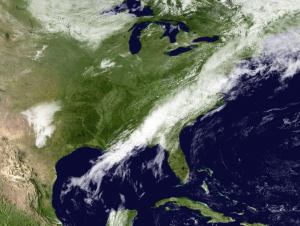
A missing component of the severe weather formula led to quiet season in the Southeast.

The Regents’ Awards are among the University System of Georgia’s highest honors, recognizing sustained excellence, national distinction, and long-term impact by faculty and researchers across the state’s public institutions.
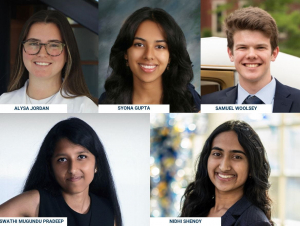
Two College of Sciences students will participate in this year's internship program, which support U.S. undergraduates pursuing advanced summer research at universities across Canada.

By funding two distinct early-stage projects, the Curci Foundation will help advance research focused on improving neurological health.
Experts In The News
Are people who have been blind for most of their lives better at hearing than sighted individuals? In a new study in JNeurosci, Woon Ju Park from the Georgia Institute of Technology and colleagues explored this question by comparing tone detection and pitch discrimination in people with and without sight.
Medical Xpress October 12, 2026For most of the industrial era, spreading crushed limestone across farmland has been treated as a carbon problem. The rock contains carbon; it ends up in contact with air and water, and by the most conservative accounting conventions, carbon is assumed to escape as carbon dioxide. Regulators and major climate assessments have baked that assumption into their default rules for decades.
A study published in Nature now argues that the opposite is true and that the error came from asking the wrong question. Across more than 120 years of records from the Mississippi River Basin, the researchers, including study co-author Chris Reinhard, conclude that agricultural liming has removed somewhere between 300 and 400 million metric tons of carbon dioxide from the atmosphere since 1900.
Intelligent Living September 27, 2026