To request a media interview, please reach out to experts using the faculty directories for each of our six schools, or contact Jess Hunt-Ralston, College of Sciences communications director. A list of faculty experts is also available to journalists upon request.
News Center
Latest News

Research suggests that people balance between exploration and habit – that is, trying something new or sticking with the familiar – when deciding what route to take.

The award celebrates Weigel's sustained, outstanding work in ecology education.
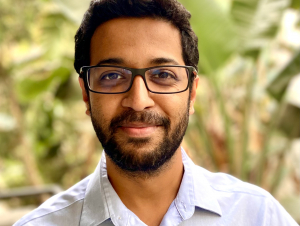
Saumya Jain, assistant professor in the School of Biological Sciences, has received a grant from the Searle Scholars Program.
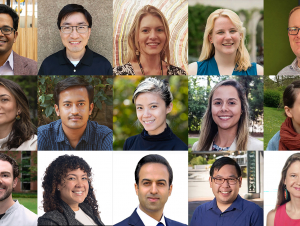
The Sustainability Next seed grant program, administered by the Brook Byers Institute for Sustainable Systems (BBISS), reaches faculty members from a diverse array of disciplines due to the generous support provided by broad-based partnerships in addition to the funds provided by the Sustainability Next committee.
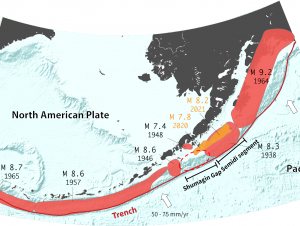
Scientists may need to rethink the assumption about subduction zones around the world.

From navigating student setbacks to an executive role at Google, Austin Hope (Psychology 2014) discusses the experiences that define his leadership trajectory.
Experts In The News
Are people who have been blind for most of their lives better at hearing than sighted individuals? In a new study in JNeurosci, Woon Ju Park from the Georgia Institute of Technology and colleagues explored this question by comparing tone detection and pitch discrimination in people with and without sight.
Medical Xpress October 12, 2026For most of the industrial era, spreading crushed limestone across farmland has been treated as a carbon problem. The rock contains carbon; it ends up in contact with air and water, and by the most conservative accounting conventions, carbon is assumed to escape as carbon dioxide. Regulators and major climate assessments have baked that assumption into their default rules for decades.
A study published in Nature now argues that the opposite is true and that the error came from asking the wrong question. Across more than 120 years of records from the Mississippi River Basin, the researchers, including study co-author Chris Reinhard, conclude that agricultural liming has removed somewhere between 300 and 400 million metric tons of carbon dioxide from the atmosphere since 1900.
Intelligent Living September 27, 2026