To request a media interview, please reach out to experts using the faculty directories for each of our six schools, or contact Jess Hunt-Ralston, College of Sciences communications director. A list of faculty experts is also available to journalists upon request.
News Center
Latest News

The research captures detailed snapshots of a process that helps cancer cells survive — and may point to new treatments.
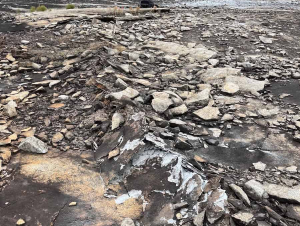
Geophysics Professor and incoming Seismological Society of America President Zhigang Peng shares what's new in research and recent work — from earthquakes and sewer pipes to exploding rock outcrops.

The NSF Graduate Research Fellowship supports “outstanding students with exceptional potential for leadership in STEM.”

Georgia Tech’s Office of Technology Licensing has named the latest Tech Ready Grant awardees, recognizing faculty-led projects spanning advanced manufacturing, biotechnology, medical devices, sustainability, and software systems. The grants provide early-stage funding to support prototype development, validation, and commercialization readiness, helping move promising research closer to industry application and market impact.
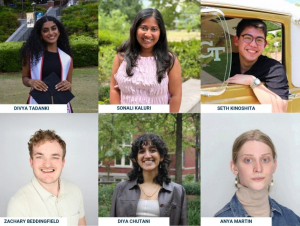
The Fulbright U.S. Student Program provides opportunities for students and professionals to study, conduct research, and teach abroad while promoting mutual understanding between the United States and other countries.
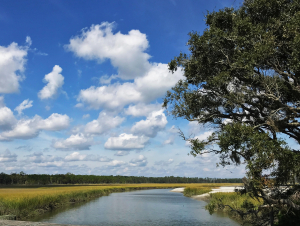
A Georgia Tech-led project advancing coastal resilience and ecosystem restoration has been selected for the inaugural Climate Resilience Fund cohort, awarded by Revive & Restore. The award is one of ten in a new $3.4 million fund to leverage genetic rescue for marine and coastal ecosystems under threat from climate shifts.
Experts In The News
Are people who have been blind for most of their lives better at hearing than sighted individuals? In a new study in JNeurosci, Woon Ju Park from the Georgia Institute of Technology and colleagues explored this question by comparing tone detection and pitch discrimination in people with and without sight.
Medical Xpress October 12, 2026For most of the industrial era, spreading crushed limestone across farmland has been treated as a carbon problem. The rock contains carbon; it ends up in contact with air and water, and by the most conservative accounting conventions, carbon is assumed to escape as carbon dioxide. Regulators and major climate assessments have baked that assumption into their default rules for decades.
A study published in Nature now argues that the opposite is true and that the error came from asking the wrong question. Across more than 120 years of records from the Mississippi River Basin, the researchers, including study co-author Chris Reinhard, conclude that agricultural liming has removed somewhere between 300 and 400 million metric tons of carbon dioxide from the atmosphere since 1900.
Intelligent Living September 27, 2026