To request a media interview, please reach out to experts using the faculty directories for each of our six schools, or contact Jess Hunt-Ralston, College of Sciences communications director. A list of faculty experts is also available to journalists upon request.
News Center
Latest News

Five interdisciplinary projects to receive IMS technical support and facility access

Scientists have shown that bacteria can learn from past experiences, store memories across generations and adapt their behavior to changing environments all without a brain or nervous system. The work could shape how scientists think about bacterial infections and antibiotic treatment.

Georgia Tech earns top-10 rankings among U.S. higher education institutions in two key measures of innovation performance in the 2025 AUTM Licensing Activity Survey.
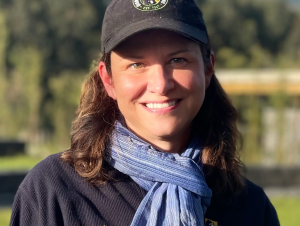
With a career rooted in science, alumna Tara Stoinski is shaping the future of wildlife conservation and gorilla preservation.
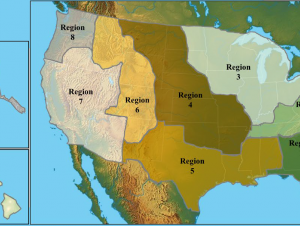
Selected by DOE’s Office of Critical Minerals and Energy Innovation, Georgia Tech will lead the Critical Minerals in the Atlantic Seaboard Plain (CM-MAP) project. The regional effort builds on DOE’s Carbon Ore, Rare Earth, and Critical Minerals (CORE-CM) initiative and will examine potential resources across the Atlantic coastal plain.

Georgia Tech researchers found that a widely used agricultural pesticide alters bumblebee gene expression, diminishing their ability to reproduce.
Experts In The News
Are people who have been blind for most of their lives better at hearing than sighted individuals? In a new study in JNeurosci, Woon Ju Park from the Georgia Institute of Technology and colleagues explored this question by comparing tone detection and pitch discrimination in people with and without sight.
Medical Xpress October 12, 2026For most of the industrial era, spreading crushed limestone across farmland has been treated as a carbon problem. The rock contains carbon; it ends up in contact with air and water, and by the most conservative accounting conventions, carbon is assumed to escape as carbon dioxide. Regulators and major climate assessments have baked that assumption into their default rules for decades.
A study published in Nature now argues that the opposite is true and that the error came from asking the wrong question. Across more than 120 years of records from the Mississippi River Basin, the researchers, including study co-author Chris Reinhard, conclude that agricultural liming has removed somewhere between 300 and 400 million metric tons of carbon dioxide from the atmosphere since 1900.
Intelligent Living September 27, 2026