To request a media interview, please reach out to experts using the faculty directories for each of our six schools, or contact Jess Hunt-Ralston, College of Sciences communications director. A list of faculty experts is also available to journalists upon request.
News Center
Latest News

Insights could not only pave the way for new treatment strategies for genetic disorders, cancer and neurodegenerative diseases, but also enhance gene-editing technologies.
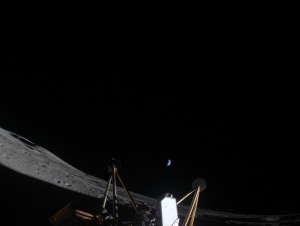
The mass spectrometer and ice drill will be crucial to future NASA missions.
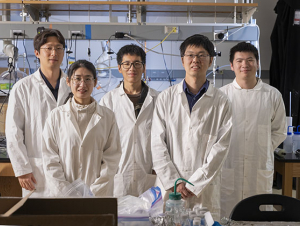
Georgia Tech researchers are innovating ways to study air quality — beginning with prehistoric insights and zooming all the way to satellites in our orbit.
Eighteen faculty members from the College of Sciences have been recognized by their students for outstanding teaching and educational impact.

As temperatures rise, proper hydration and heat acclimatization can help maintain physical and mental health. School of Biological Sciences Professor Mindy Millard-Stafford and Adjunct Professor Mike Sawka discuss best practices and strategies to avoid heat-related illness and dehydration while optimizing performance.
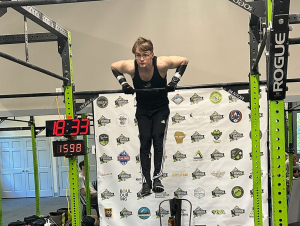
A School of Physics alumnus has broken the world record for the most muscle-ups in 24 hours.
Experts In The News
In an article published by The Conversation, Professor Joseph Montoya, Postdoctoral Fellow Xing Zhou, and their collaborator discuss sargassum blooms and their impact on the Caribbean and Gulf coasts and the coasts of the tropical Atlantic. According to their research, the vast mats of smelly, brown seaweed affecting these areas may have entered a "self-sustaining cycle, effectively feeding their own expansion."
The Conversation July 28, 2026Researchers in the School of Physics, working with King Fahd University of Petroleum and Minerals, have found that standard methods for identifying chirality in topological phases fail when applied to mixed quantum states. The study reveals that established diagnostics, including bulk-boundary correspondence and the modular commutator, are unreliable in these complex systems. Consequently, the research presents two new measures, based on relative entropy, to accurately diagnose chirality and determine the chiral central charge in decohered topological phases, indicating a need for a new set of tools when investigating mixed-state topology.
Quantum Zeitgeist July 16, 2026