To request a media interview, please reach out to experts using the faculty directories for each of our six schools, or contact Jess Hunt-Ralston, College of Sciences communications director. A list of faculty experts is also available to journalists upon request.
News Center
Latest News
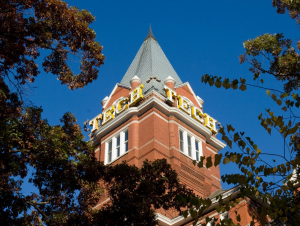
By uniting experts across disciplines, Georgia Tech is positioning itself at the forefront of neuroscience and space research.
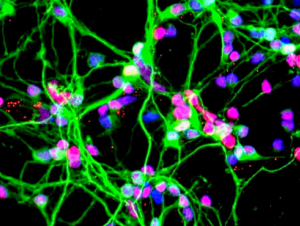
Researchers at Georgia Tech have developed an algorithm that helps AI models develop internal organization just like the human brain — boosting efficiency by 20 percent.
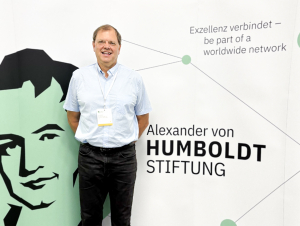
The award will support Kostka’s research on the role of marine plant microbiomes in coastal climate resilience in collaboration with Germany’s Max Planck Institute.
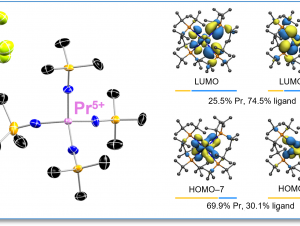
New Oxidation State for a Rare Earth Element Could Advance Quantum and Electronic Devices
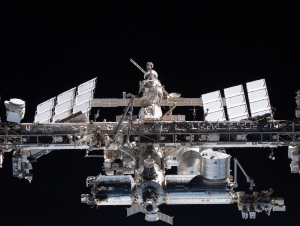
Solar cells account for approximately six percent of the electricity used on Earth; however, in space, they play a significantly larger role, with nearly all satellites relying on advanced solar cells for their power. That’s why Georgia Tech researchers will soon send 18 photovoltaic cells to the International Space Station for a study of how space conditions affect the devices’ operation over time.
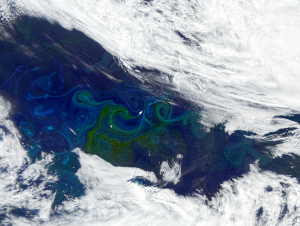
Ocean waters are getting greener at the poles and bluer toward the equator, according to an analysis of satellite data published in Science. The change reflects shifting concentrations of chlorophyll made by phytoplankton. If the trend continues, marine food webs could be affected, with potential impacts on fisheries near the equator and carbon sequestration near the poles.
Experts In The News
In an article published by The Conversation, Professor Joseph Montoya, Postdoctoral Fellow Xing Zhou, and their collaborator discuss sargassum blooms and their impact on the Caribbean and Gulf coasts and the coasts of the tropical Atlantic. According to their research, the vast mats of smelly, brown seaweed affecting these areas may have entered a "self-sustaining cycle, effectively feeding their own expansion."
The Conversation July 28, 2026Researchers in the School of Physics, working with King Fahd University of Petroleum and Minerals, have found that standard methods for identifying chirality in topological phases fail when applied to mixed quantum states. The study reveals that established diagnostics, including bulk-boundary correspondence and the modular commutator, are unreliable in these complex systems. Consequently, the research presents two new measures, based on relative entropy, to accurately diagnose chirality and determine the chiral central charge in decohered topological phases, indicating a need for a new set of tools when investigating mixed-state topology.
Quantum Zeitgeist July 16, 2026