College of Sciences

Latest News

image--2-.png

Georgia Tech researchers demonstrated the mechanics behind neural tube closure, which can lead to severe or fatal birth defects if unsuccessful. 

web_0000_BSF-Compost-Hu.jpg

A Georgia Tech researcher and his students are using experimental composting to reduce campus food waste and support agriculture. Using a unique closed-loop system, black soldier fly larvae eat their way through more than 300 pounds of food in one semester, creating valuable frass that students harvest. What they’ve found so far is a composting method with the potential to dramatically reduce harmful greenhouse gas emissions while producing a nutrient-dense fertilizer.  

David Lloyd George (Physics 2024)

The Yellow Jacket who broke the world record in 2025 for the most muscle-ups in 24 hours, set three new world records for ring muscle-ups, a harder variant, on April 12, 2026.

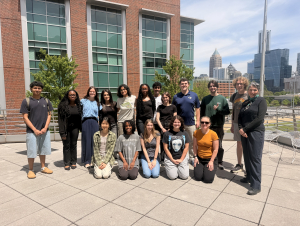
Leslie Roberts, David Gaston, Susan Lozier, Marc Sprouse, Arya Akbarshahi, Andrea Comsa, and James Stringfellow

The event provided an opportunity for students and alumni to network and engage in career-focused discussions.

3MT Winners

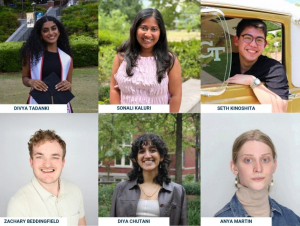
Five graduate students emerge victorious at Georgia Tech's 11th annual Three Minute Thesis (3MT) competition on Tuesday, April 7th.

20260204_GEMs-IV-Group-Photo_LR.jpeg

In February, the Georgia Institute of Technology,  together with the University of Georgia, Georgia State University, the Georgia Mining Association, and the British Consulate‑General Atlanta, hosted the fourth Growing Partnerships for Essential Minerals (GEMs‑4) workshop in Atlanta. The workshop built on a growing transatlantic partnership dedicated to advancing innovation across the critical minerals value chain. 

Experts In The News

Bacteria have no neurons or memories in the human sense. Yet in a new study, researchers at Georgia Tech and Carnegie Mellon University — including School of Physics Associate Professor Shiladitya Banerjee and Postdoctoral Fellow Josiah Kratz — found that individual E. coli cells carried traces of past hardship into the future. When nutrients repeatedly rose and fell, the cells changed how quickly they grew, suggesting that even simple microbes can use experience to prepare for what may come next. 

ZME Science June 10, 2026

A new Georgia Tech study found the chemical plume from the 2024 BioLab fire in Conyers, Ga., released bromine, not chlorine, as its dominant compound in the immediate aftermath. This finding stands in stark contrast to early public warnings about the fire, which prompted 17,000 evacuations, closed portions of I-20, and led to overnight shelter-in-place orders for weeks. Nearly two years later, the U.S. Chemical Safety Board is still investigating the fire and chemical release. 

The Georgia Tech paper containing the study was published in the March 2026 issue of Environmental Science & Technology Letters and identified 26 different chemical species in the air following the Sept. 29, 2024, fire at the BioLab facility in Conyers. The authors wrote that the chemically complex plume "exposed millions in metropolitan Atlanta to numerous toxic compounds" and represented the first detailed study of a pool chemical facility fire.

GPB June 10, 2026

Upcoming Events

Aug
05
2026
Enjoy curated wines, thoughtfully selected pairing, and a graduate student poster showcase with other College of Sciences alumni and friends of the College.

Spark: College of Sciences at Georgia Tech

Welcome — we're so glad you're here. Learn more about us in this video, narrated by Susan Lozier, College of Sciences Dean and Betsy Middleton and John Clark Sutherland Chair.