College of Sciences

Latest News

Jacob Adler (left) and Sharissa Thompson (right) conducting research.

New research is showing that atmospheric pressure shifts dramatically altered how mud and water flowed on Mars — sometimes boiling, sometimes freezing — offering fresh clues to reconstruct the planet's ancient climate and habitability.

Alexander Cachine

Cachine was selected for his work in solving modern medical challenges using ancient textile techniques. 

The Tower, Spring 2025 Edition

The Tower, Georgia Tech’s undergraduate research journal, is seeking submissions from students across all disciplines who want to have their work published in a campuswide platform. 

Benjamin Manoj (front) and other Yellow Jackets Against Poverty members dig holes for the foundation of a new homeless shelter.

Fighting poverty and fostering kindness, the student-led Yellow Jackets Against Poverty Club makes a hands-on difference in the lives of those in need. 

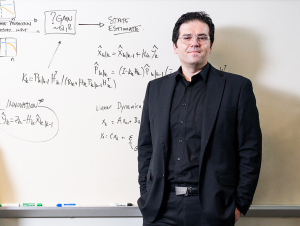
Professor Randall W. Engle

Professor Engle’s research centers on the nature of our ability to maintain attention and focus in the face of external and internal distractions. His pioneering work has influenced a wide range of fields and contributed to modern theories of cognitive and emotional control.

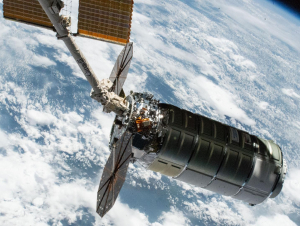
Digit-Team-6-11_8_25-CME-for-Nov-LIDAR-News.png

To achieve better training outcomes with faster deployment results, Fukang Liu and Feiyang Wu, graduate students under Professor Ye Zhao from the Woodruff School of Mechanical Engineering and faculty member of the Institute for Robotics and Intelligent Machines, have published a duo of papers in IEEE Robotics and Automation Letters. This is a collaborative work with three other IRIM affiliated faculties, Profs. Danfei Xu, Yue Chen, and Sehoon Ha, as well as Prof. Anqi Wu from School of Computational Science and Engineering.

Experts In The News

Bacteria have no neurons or memories in the human sense. Yet in a new study, researchers at Georgia Tech and Carnegie Mellon University — including School of Physics Associate Professor Shiladitya Banerjee and Postdoctoral Fellow Josiah Kratz — found that individual E. coli cells carried traces of past hardship into the future. When nutrients repeatedly rose and fell, the cells changed how quickly they grew, suggesting that even simple microbes can use experience to prepare for what may come next. 

ZME Science June 10, 2026

A new Georgia Tech study found the chemical plume from the 2024 BioLab fire in Conyers, Ga., released bromine, not chlorine, as its dominant compound in the immediate aftermath. This finding stands in stark contrast to early public warnings about the fire, which prompted 17,000 evacuations, closed portions of I-20, and led to overnight shelter-in-place orders for weeks. Nearly two years later, the U.S. Chemical Safety Board is still investigating the fire and chemical release. 

The Georgia Tech paper containing the study was published in the March 2026 issue of Environmental Science & Technology Letters and identified 26 different chemical species in the air following the Sept. 29, 2024, fire at the BioLab facility in Conyers. The authors wrote that the chemically complex plume "exposed millions in metropolitan Atlanta to numerous toxic compounds" and represented the first detailed study of a pool chemical facility fire.

GPB June 10, 2026

Upcoming Events

Aug
05
2026
Enjoy curated wines, thoughtfully selected pairing, and a graduate student poster showcase with other College of Sciences alumni and friends of the College.

Spark: College of Sciences at Georgia Tech

Welcome — we're so glad you're here. Learn more about us in this video, narrated by Susan Lozier, College of Sciences Dean and Betsy Middleton and John Clark Sutherland Chair.