The Institute for Matter and Systems (IMS) has selected seven interdisciplinary research projects for funding, including one new research initiative, one new program, and one new center. IMS will also provide renewed funding to three research initiatives and one program to support their continued growth and impact.
IMS focuses on transformational technologies and societal systems that arise where innovative materials, devices, and processes meet.
“Transformative interdisciplinary research takes time to develop, and a second year of funding gives these teams the opportunity to build on early successes, expand collaborations, and demonstrate the impact of their work,” said Eric Vogel, executive director of IMS. “This continued investment helps researchers establish a strong foundation, achieve key milestones, and position promising initiatives to grow into larger, sustainable research programs capable of attracting significant external support.”
The funded projects come from four colleges and eight schools across Georgia Tech and the Georgia Tech Research Institute (GTRI). IMS selected these projects based on their innovative approaches, potential impact, and alignment with the IMS mission to push the boundaries of science and technology. They will receive funding, access to state-of-the-art facilities, and other support from the institute to bring their research to life.
IMS supports interdisciplinary research both in nationally recognized areas of need and those just emerging. It scaffolds research from the ground up, from seed funding for new initiatives to infrastructure support for research programs and embedded support for research centers.
The 2026 research initiatives and programs include:
Research Initiatives:
Extreme-Environment Microelectronics | Nima Ghalichechian, John Cressler, Farrokh Ayazi, School of Electrical and Computer Engineering
Multifunctional Materials for Efficient Buildings | Akanksha Menon, George W. Woodruff School of Mechanical Engineering
Precision Agriculture in Controlled Environments | Antonio Facchetti, School of Materials Science and Engineering; Yongsheng Cheng, School of Civil and Environmental Engineering; Anju Toor, School of Materials Science and Engineering
Sustainable Thermoregulation Strategies for Climate Change Resilience | Matthew Flavin, School of Electrical and Computer Engineering; Joe Bozeman, School of Civil and Environmental Engineering; Noura Howell, School of Literature, Media and Communication
Research Programs:
Autonomous Research for Materials | Mark Losego, School of Materials Science and Engineering; Shreyas Kousik, George W. Woodruff School of Mechanical Engineering; Animesh Garg, School of Interactive Computing
Georgia Tech Center for Semiconductor and Computing | Asif Khan, School of Electrical and Computer Engineering and the George W. Woodruff School of Mechanical Engineering; Divya Mahajan, School of Computer Science and the School of Electrical and Computer Engineering
Research Center:
Quantum Applications Research Center | Martin Mourigal, School of Physics; Robert Wylie, Georgia Tech Research Institute
Related Media
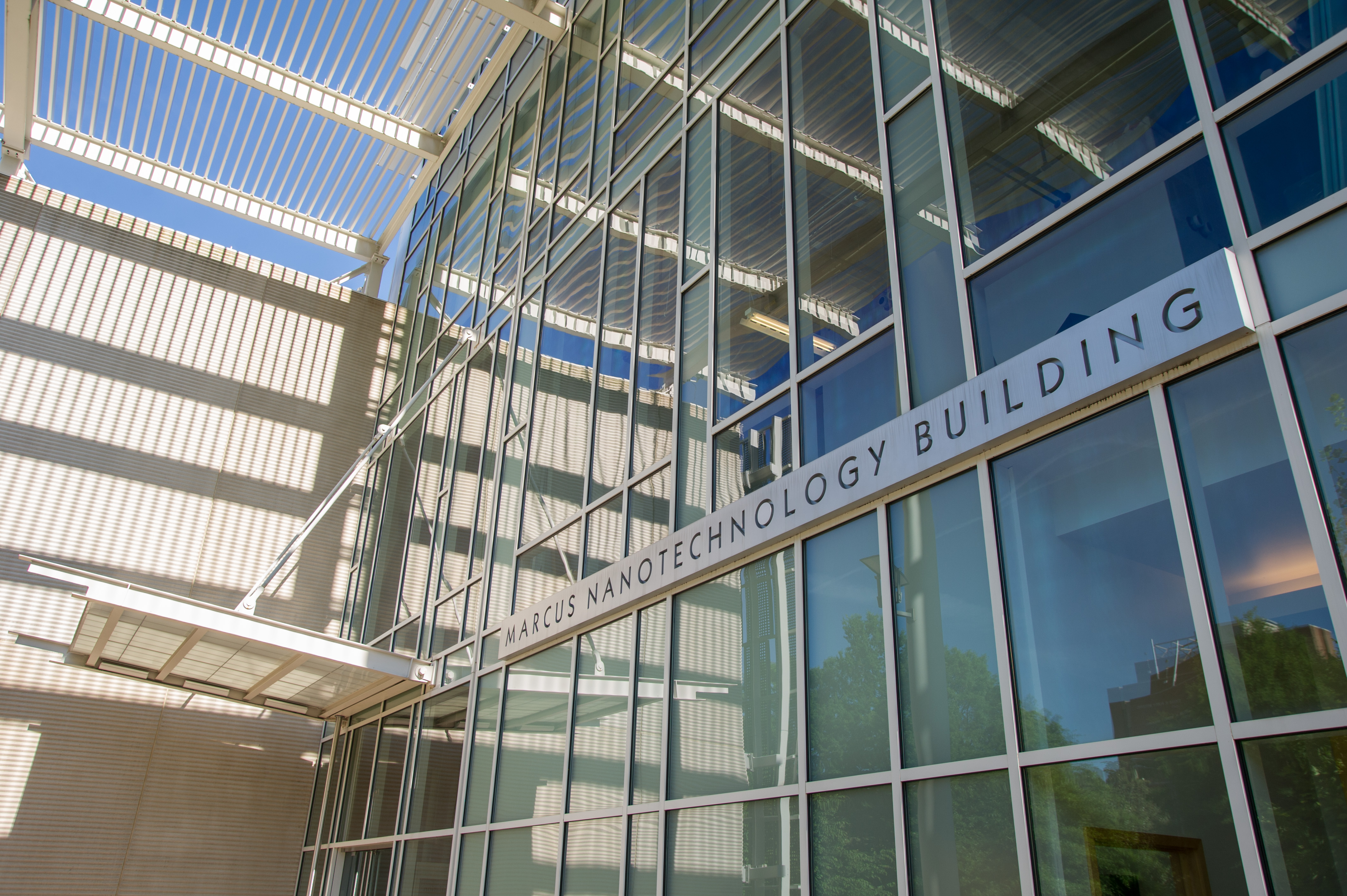
Marcus Nanotechnology Building
For More Information Contact
Amelia Neumeister | Communications Manager
The Institute for Matter and Systems