To request a media interview, please reach out to experts using the faculty directories for each of our six schools, or contact Jess Hunt-Ralston, College of Sciences communications director. A list of faculty experts is also available to journalists upon request.
News Center
Latest News

Garg’s groundbreaking research on chemical communication between humans and microbes — and her dedication to advancing women in STEM — has earned her national recognition as a WCC Rising Star.
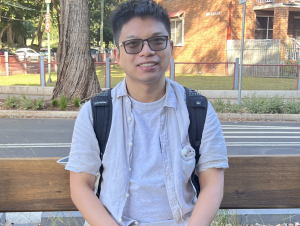
Congratulations to Gong Chen, winner of the 2026-2027 AMS Stefan Bergman Fellowship.
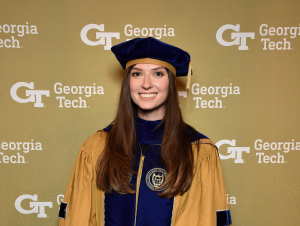
A Ph.D. graduate’s research shows that the more humanlike an AI agent is, the less likely a user is to follow it.
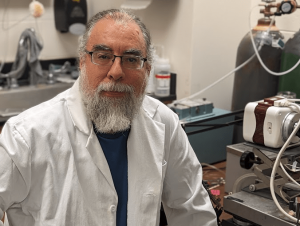
Physics Professor Flavio Fenton has been named a Bill Kent Family Foundation AI in Higher Education Faculty Fellow. The fellowship supports faculty projects that explore innovative, ethical, and impactful uses of AI in teaching and learning.
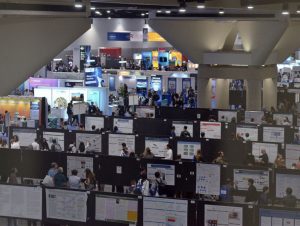
With more than 60 presentations and recognition for neuroscience outreach and AI research, Georgia Tech demonstrated its growing impact at the 2025 Society for Neuroscience’s annual meeting.
The AI4Science Center's seed grant aims to support the development of research projects centered on innovation and collaboration.
Experts In The News
In an article published by The Conversation, Professor Joseph Montoya, Postdoctoral Fellow Xing Zhou, and their collaborator discuss sargassum blooms and their impact on the Caribbean and Gulf coasts and the coasts of the tropical Atlantic. According to their research, the vast mats of smelly, brown seaweed affecting these areas may have entered a "self-sustaining cycle, effectively feeding their own expansion."
The Conversation July 28, 2026Researchers in the School of Physics, working with King Fahd University of Petroleum and Minerals, have found that standard methods for identifying chirality in topological phases fail when applied to mixed quantum states. The study reveals that established diagnostics, including bulk-boundary correspondence and the modular commutator, are unreliable in these complex systems. Consequently, the research presents two new measures, based on relative entropy, to accurately diagnose chirality and determine the chiral central charge in decohered topological phases, indicating a need for a new set of tools when investigating mixed-state topology.
Quantum Zeitgeist July 16, 2026