To request a media interview, please reach out to experts using the faculty directories for each of our six schools, or contact Jess Hunt-Ralston, College of Sciences communications director. A list of faculty experts is also available to journalists upon request.
News Center
Latest News
Created by the Research Corporation for Science Advancement, the award provides continuity funding to support early-career researchers pursuing programs focused on training the next generation of scientists.

New work from Georgia Tech is showing how a simple glass of wine can serve as a powerful gateway for understanding advanced research and technologies.
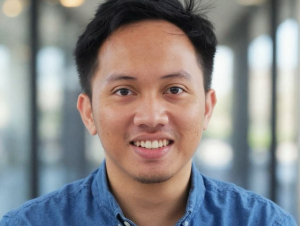
Afi Ramadhani, a graduate student in economics and a student affiliate of Georgia Tech’s Energy Policy Innovation Center, has won a prize for the best research paper from the School of Economics. The research developed in the paper was supported by EPIcenter’s Graduate Student Summer Research Program.
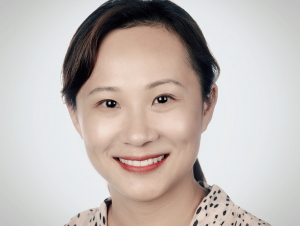
Georgia Tech has appointed Yuanzhi Tang as executive director of the Strategic Energy Institute (SEI), effective Feb. 1.
Tang will lead the strategic vision, interdisciplinary research efforts, and internal and external partnerships at SEI, strengthening connections across Georgia Tech’s Colleges, Interdisciplinary Research Institutes (IRI), the Georgia Tech Research Institute (GTRI), and external partners to advance energy-related initiatives.
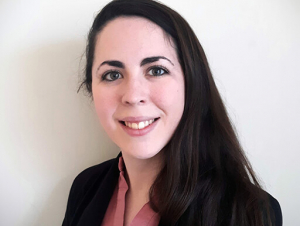
When Postdoctoral Research Fellow Hannah Youngblood’s work on exfoliation glaucoma (XFG) was featured by the BrightFocus Foundation, it caught the attention of Jennifer Rucker, an Alabama resident who was diagnosed with XFG several years ago. What followed was a meaningful dialogue and a shared sense of purpose — and the creation of the Georgia Tech Glaucoma Research Fund (Wreck Glaucoma! Fund).
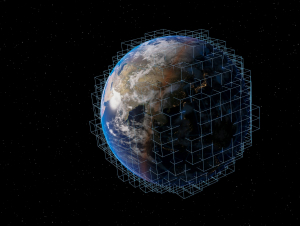
How do you know anything is real? Some things you can see directly, like your fingers. Other things, like your chin, you need a mirror or a camera to see. Other things can’t be seen, but you believe in them because a parent or a teacher told you, or you read it in a book.
Experts In The News
In an article published by The Conversation, Professor Joseph Montoya, Postdoctoral Fellow Xing Zhou, and their collaborator discuss sargassum blooms and their impact on the Caribbean and Gulf coasts and the coasts of the tropical Atlantic. According to their research, the vast mats of smelly, brown seaweed affecting these areas may have entered a "self-sustaining cycle, effectively feeding their own expansion."
The Conversation July 28, 2026Researchers in the School of Physics, working with King Fahd University of Petroleum and Minerals, have found that standard methods for identifying chirality in topological phases fail when applied to mixed quantum states. The study reveals that established diagnostics, including bulk-boundary correspondence and the modular commutator, are unreliable in these complex systems. Consequently, the research presents two new measures, based on relative entropy, to accurately diagnose chirality and determine the chiral central charge in decohered topological phases, indicating a need for a new set of tools when investigating mixed-state topology.
Quantum Zeitgeist July 16, 2026