To request a media interview, please reach out to experts using the faculty directories for each of our six schools, or contact Jess Hunt-Ralston, College of Sciences communications director. A list of faculty experts is also available to journalists upon request.
News Center
Latest News
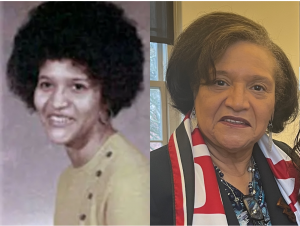
Clemmie Whatley’s time studying and teaching math at Georgia Tech laid the groundwork for decades of leadership in classrooms, corporate America, and the community.
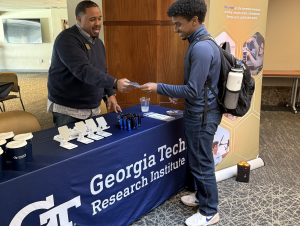
GTRI Career Day emphasized mission‑driven research and the steps students can take to align their academic interests with real‑world work.
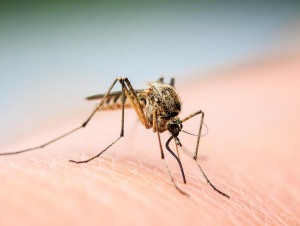
Researchers have visualized mosquito flight behavior for the first time — which could improve mosquito-control strategies.
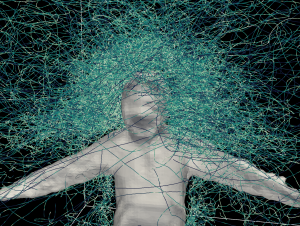
By tracking the flight of many mosquitoes around a student volunteer, we hoped to determine how they made decisions in response to his presence. Understanding how mosquitoes respond to humans is a first step to controlling them.
This year's award recipients include four faculty members from the College of Sciences.
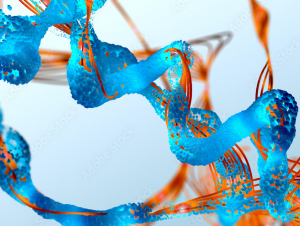
Georgia Tech researchers have developed a breakthrough system to manufacture valuable amino acids. It’s the most efficient system of its kind — and removes more carbon from the atmosphere than it emits.
Experts In The News
In an article published by The Conversation, Professor Joseph Montoya, Postdoctoral Fellow Xing Zhou, and their collaborator discuss sargassum blooms and their impact on the Caribbean and Gulf coasts and the coasts of the tropical Atlantic. According to their research, the vast mats of smelly, brown seaweed affecting these areas may have entered a "self-sustaining cycle, effectively feeding their own expansion."
The Conversation July 28, 2026Researchers in the School of Physics, working with King Fahd University of Petroleum and Minerals, have found that standard methods for identifying chirality in topological phases fail when applied to mixed quantum states. The study reveals that established diagnostics, including bulk-boundary correspondence and the modular commutator, are unreliable in these complex systems. Consequently, the research presents two new measures, based on relative entropy, to accurately diagnose chirality and determine the chiral central charge in decohered topological phases, indicating a need for a new set of tools when investigating mixed-state topology.
Quantum Zeitgeist July 16, 2026