College of Sciences

Latest News

Generating Buzz: A Protein-Packed Industry

In the latest episode of Generating Buzz, Lesley Baradel explores the high-protein food craze and explains how the rise of GLP-1s factors into the increased focus on this essential macronutrient. 

Miller Templeton

Templeton has dedicated six decades to Georgia Tech — as a student, administrator, and volunteer — demonstrating an enduring commitment to his beloved alma mater.

Lynn Kamerlin
It is the highest degree of membership awarded by the society. "I look forward to giving back to the physics community, supporting the mission of the society, and working to remind the next generation that physics is for everyone," says Kamerlin.
Benjamin Freeman
The fellowship is one of the most competitive and prestigious awards available to early-career scholars, and will support Freeman as he studies birds worldwide from Appalachia to Ecuador, investigating how mountain species respond to a changing climate — and how to facilitate their survival. 
“Cracks are complex — they interact with the material, change shape, and respond dynamically," says Kolvin. "All of this affects the overall toughness, and that impacts safety.” (Adobe Stock)

Research from Georgia Tech is showing how cracks occur and spread through materials — and how best to prevent them. 

Vinayak Agarwal

Created by the Research Corporation for Science Advancement, the award provides continuity funding to support early-career researchers pursuing programs focused on training the next generation of scientists.

Experts In The News

Bacteria have no neurons or memories in the human sense. Yet in a new study, researchers at Georgia Tech and Carnegie Mellon University — including School of Physics Associate Professor Shiladitya Banerjee and Postdoctoral Fellow Josiah Kratz — found that individual E. coli cells carried traces of past hardship into the future. When nutrients repeatedly rose and fell, the cells changed how quickly they grew, suggesting that even simple microbes can use experience to prepare for what may come next. 

ZME Science June 10, 2026

A new Georgia Tech study found the chemical plume from the 2024 BioLab fire in Conyers, Ga., released bromine, not chlorine, as its dominant compound in the immediate aftermath. This finding stands in stark contrast to early public warnings about the fire, which prompted 17,000 evacuations, closed portions of I-20, and led to overnight shelter-in-place orders for weeks. Nearly two years later, the U.S. Chemical Safety Board is still investigating the fire and chemical release. 

The Georgia Tech paper containing the study was published in the March 2026 issue of Environmental Science & Technology Letters and identified 26 different chemical species in the air following the Sept. 29, 2024, fire at the BioLab facility in Conyers. The authors wrote that the chemically complex plume "exposed millions in metropolitan Atlanta to numerous toxic compounds" and represented the first detailed study of a pool chemical facility fire.

GPB June 10, 2026

Upcoming Events

Aug
05
2026
Enjoy curated wines, thoughtfully selected pairing, and a graduate student poster showcase with other College of Sciences alumni and friends of the College.

Spark: College of Sciences at Georgia Tech

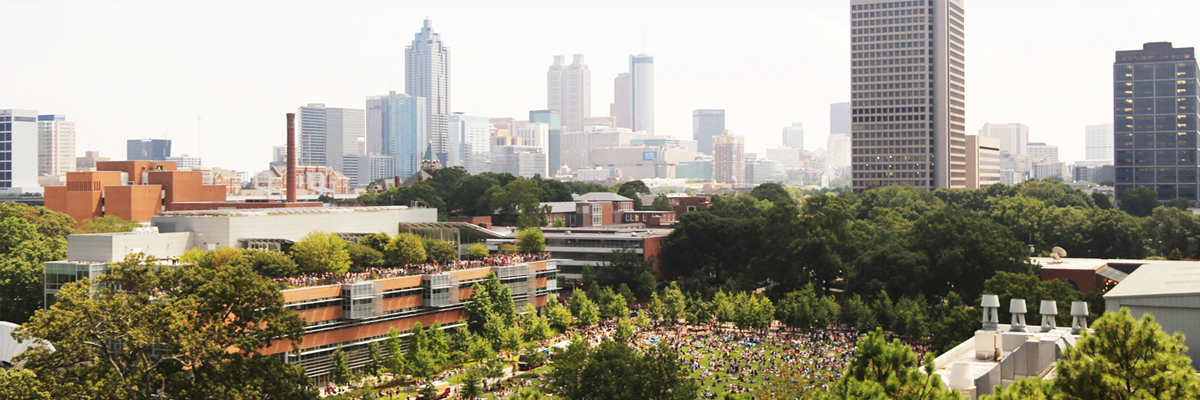
Welcome — we're so glad you're here. Learn more about us in this video, narrated by Susan Lozier, College of Sciences Dean and Betsy Middleton and John Clark Sutherland Chair.