College of Sciences

Latest News

Luis Delgado

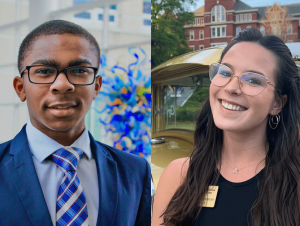
Because of Tech Promise, Luis Delgado and Nick Fabrizio were able to dream big and set their sights on Georgia Tech.

Laura Cadonati

Laura Cadonati, professor in the School of Physics and associate dean for Research in the College of Sciences, has been elected to the Board of Directors of the American Physical Society.

Smole Stack from Adobe

The researchers suggest that carbon removal can have clear benefits on the road to reducing greenhouse gas emissions, but it needs more oversight to be responsibly adopted at large scales.

georgia-forest.jpeg

Georgia Tech is pleased to partner with the Georgia Forestry Commission on the approved $8.9 million Georgia Forestry Innovation Initiative included in Governor Brian Kemp’s amended FY 2026 budget. This effort aims to transform low-value wood and mill byproducts into high-value materials, strengthening Georgia’s forest-based economy and supporting new commercial opportunities across the state. 

20260226-Cancer-Delivery-System-Story-6.jpg

Georgia Tech researcher Nick Housley is developing a drug‑delivery system designed to send cancer treatments directly to tumors while minimizing damage to healthy tissue. Early preclinical results show that the nanohydrogels successfully concentrated drugs at tumor sites, and Housley’s team is now preparing for broader testing to move the technology toward clinical trials.

EnergyDayEmailHeader.jpg

Georgia Tech Energy Day returns this year on March 19 with an expanded focus and a new collaborative momentum. Cohosted by the Georgia Tech Institute for Matter and Systems (IMS) and the Strategic Energy Institute, (SEI) with plenary session support from the Energy Policy and Innovation Center, Energy Day 2026 convenes leaders from academia, industry, government, and students to address the challenges associated with meeting the rapidly growing electricity demand driven by artificial intelligence (AI) and high-performance computing. 

Experts In The News

Bacteria have no neurons or memories in the human sense. Yet in a new study, researchers at Georgia Tech and Carnegie Mellon University — including School of Physics Associate Professor Shiladitya Banerjee and Postdoctoral Fellow Josiah Kratz — found that individual E. coli cells carried traces of past hardship into the future. When nutrients repeatedly rose and fell, the cells changed how quickly they grew, suggesting that even simple microbes can use experience to prepare for what may come next. 

ZME Science June 10, 2026

A new Georgia Tech study found the chemical plume from the 2024 BioLab fire in Conyers, Ga., released bromine, not chlorine, as its dominant compound in the immediate aftermath. This finding stands in stark contrast to early public warnings about the fire, which prompted 17,000 evacuations, closed portions of I-20, and led to overnight shelter-in-place orders for weeks. Nearly two years later, the U.S. Chemical Safety Board is still investigating the fire and chemical release. 

The Georgia Tech paper containing the study was published in the March 2026 issue of Environmental Science & Technology Letters and identified 26 different chemical species in the air following the Sept. 29, 2024, fire at the BioLab facility in Conyers. The authors wrote that the chemically complex plume "exposed millions in metropolitan Atlanta to numerous toxic compounds" and represented the first detailed study of a pool chemical facility fire.

GPB June 10, 2026

Upcoming Events

Aug
05
2026
Enjoy curated wines, thoughtfully selected pairing, and a graduate student poster showcase with other College of Sciences alumni and friends of the College.

Spark: College of Sciences at Georgia Tech

Welcome — we're so glad you're here. Learn more about us in this video, narrated by Susan Lozier, College of Sciences Dean and Betsy Middleton and John Clark Sutherland Chair.